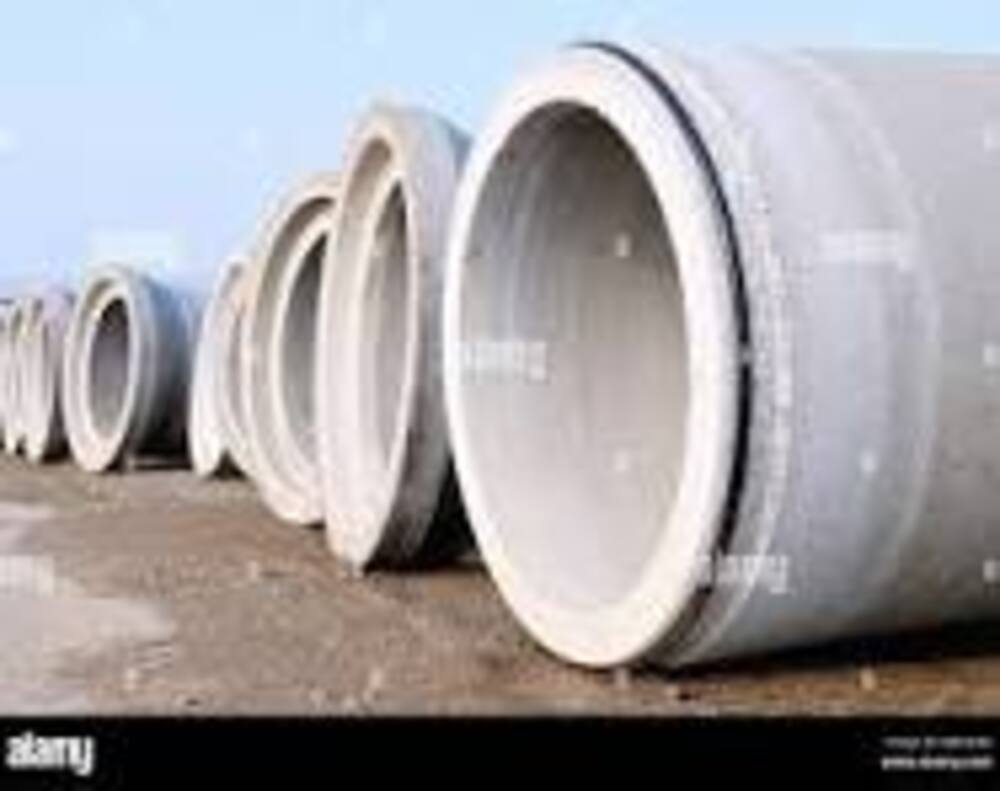
Spigot & Socket Rcc Hume Pipe

Spigot & Socket Rcc Hume Pipe

Price 990 INR/ Bunch

Spigot & Socket Rcc Hume Pipe Specification

  • Sealing Type
  • Rubber gasket or cement mortar
  • Tensile Strength
  • Minimum 2.5 - 3.0 MPa (for concrete material)
  • Temperature Range
  • -10C to +55C
  • Diameter
  • 150 mm to 2600 mm
  • Bend Radius
  • Not flexible-straight sections only
  • Yield Strength
  • As per steel reinforcement, min. 250 MPa
  • Connection Type
  • Spigot and Socket
  • Flexibility
  • Rigid
  • Coating Type
  • Uncoated/Plain
  • Tolerance
  • As per IS:458 standards
  • Product Type
  • Spigot & Socket RCC Hume Pipe
  • Material
  • Reinforced Cement Concrete (RCC)
  • Connection
  • Spigot & Socket Joint
  • Shape
  • Cylindrical
  • Standard
  • IS 458:2003
  • Surface Treatment
  • Smooth finished
  • Outer Diameter
  • 150 mm to 2600 mm
  • Section Shape
  • Round
  • Length
  • 2 to 3 meters
  • Thickness
  • As per required class (NP2/NP3/NP4)
  • Color
  • Grey
  • Usage
  • Sewerage, Drainage, and Irrigation
  • Rated Pressure
  • Up to 0.5 MPa (NP2/NP3)
  • Application
  • Water drainage, Culverts, Sewage, Irrigation
  • Material Grade
  • M30 or higher, as per project requirement
  • Reinforcement Type
  • Mild steel and/or HYSD bars
  • Resistance
  • Corrosion and abrasion resistant
  • Hydraulic Efficiency
  • High flow capacity due to smooth bore
  • Internal Finish
  • Smooth for efficient flow
  • Manufacturing Process
  • Centrifugal spinning or vertical casting
  • Load Class
  • NP2 (Light), NP3 (Medium), NP4 (Heavy)
  • Installation Method
  • Buried underground with proper bedding
  • Weight
  • Depends on size and class, approx. 100 kg/m (for 450 mm NP3)
  • Joint Type
  • Spigot & Socket with rubber ring sealing or collar joint
  • Packing Type
  • Loose or bundled as per order


About Spigot & Socket Rcc Hume Pipe

Reinforced Cement Concrete RCC Spun Pipes Description

Reinforced Cement Concrete RCC spun pipes are high strength concrete pipes reinforced with steel and manufactured using a centrifugal spinning process. They are widely used for underground drainage sewerage irrigation and culvert systems due to their durability and load bearing capacity.

Key Features
High strength Steel reinforcement provides excellent resistance to internal pressure and external loads
Dense structure The spinning process removes excess water making the concrete compact and less porous
Durability Resistant to corrosion weathering and moderate chemical attack
Leak proof joints Designed with spigot and socket or collar joints for tight connections
Long service life Typically lasts several decades with minimal maintenance

Manufacturing Process
Mould preparation Steel moulds are cleaned and assembled
Reinforcement placement Steel cages are placed inside the mould
Concrete filling Concrete mix is poured into the mould
Spinning The mould rotates at high speed distributing concrete evenly and compacting it
Curing Pipes are cured by water or steam curing to gain strength
Demoulding and finishing Pipes are removed and inspected

Types of RCC Spun Pipes
Non pressure pipes NP classes NP2 NP3 NP4 used for drainage and sewer systems
Pressure pipes P classes designed to carry water under pressure such as irrigation pipelines

Sizes
Diameter typically ranges from 150 mm to 2000 mm or more
Length usually 2 to 2.5 meters per pipe depending on manufacturer

Applications
Sewerage and drainage systems
Stormwater disposal
Irrigation canals and water supply
Road culverts and cross drainage works
Industrial effluent disposal

Advantages
Strong and rigid structure
Economical for large scale projects
Fire resistant and environmentally friendly
Can withstand heavy soil and traffic loads

Limitations
Heavy weight requires machinery for handling
May crack if not handled properly
Jointing requires proper sealing to prevent leakage

Let me know if you want a short one line description or a tender specification format


Precision Manufacturing for Lasting Performance

Spigot & Socket RCC Hume Pipes are manufactured using centrifugal spinning or vertical casting methods, which ensure uniformity and high strength. The pipes are meticulously reinforced with mild steel or HYSD bars, providing resilience under heavy loads. With tolerances and specifications adhering to IS 458:2003, each pipe guarantees reliability and durability in demanding environments.


Optimized Joint System for Secure Connections

Featuring a spigot and socket joint combined with a rubber ring sealing or collar joint, these pipes offer leak-proof connections. This design minimizes installation time and enhances performance, making them ideal for buried underground infrastructure such as sewerage, water drainage, and irrigation networks.


Superior Hydraulic Efficiency and Durability

The smooth internal bore of these RCC Hume Pipes ensures high flow capacity while resisting sediment buildup. Coupled with outstanding corrosion and abrasion resistance, these pipes maintain their integrity and functionality over extended periods, making them a cost-effective choice for critical civil projects.

FAQ's of Spigot & Socket Rcc Hume Pipe:


Q: How are Spigot & Socket RCC Hume Pipes manufactured?

A: These pipes are produced through centrifugal spinning or vertical casting processes, ensuring a uniform, dense structure. Reinforcement with mild steel and/or HYSD bars adds strength, and the final product is crafted to meet IS 458:2003 specifications.

Q: What types of joints are used in these RCC Hume Pipes?

A: Spigot & Socket RCC Hume Pipes use spigot and socket joints, sealed either with a rubber gasket or by applying cement mortar, creating a watertight and secure connection suitable for underground installation.

Q: When should different load classes (NP2, NP3, NP4) be selected?

A: Load class selection depends on project requirements. NP2 is for light-duty applications, NP3 for medium loads, and NP4 for heavy-duty installations where greater strength is necessary, such as in high-traffic or deep burial conditions.

Q: Where are Spigot & Socket RCC Hume Pipes typically used?

A: These pipes are ideal for municipal and infrastructure projects, including sewerage systems, water drainage, irrigation, and culverts. Their robust construction makes them suitable for a variety of underground pipeline networks.

Q: What benefits do Spigot & Socket RCC Hume Pipes offer for water flow?

A: The pipes feature a smooth internal finish, providing high hydraulic efficiency and minimizing friction losses. This design enables effective transportation of fluids and reduces the risk of blockages.

Q: How are the pipes installed and what precautions are necessary?

A: Pipes are laid underground with proper bedding to ensure alignment and support. Secure jointing using rubber gaskets or cement mortar is essential for leak prevention, and appropriate handling prevents damage during transport and installation.

Tell us about your requirement
product

Price:

Quantity
Select Unit

  • 50
  • 100
  • 200
  • 250
  • 500
  • 1000+
Additional detail
Mobile number

Email


arrow