About NP RCC Hume Pipe
Reinforced Cement Concrete RCC Spun Pipes Description
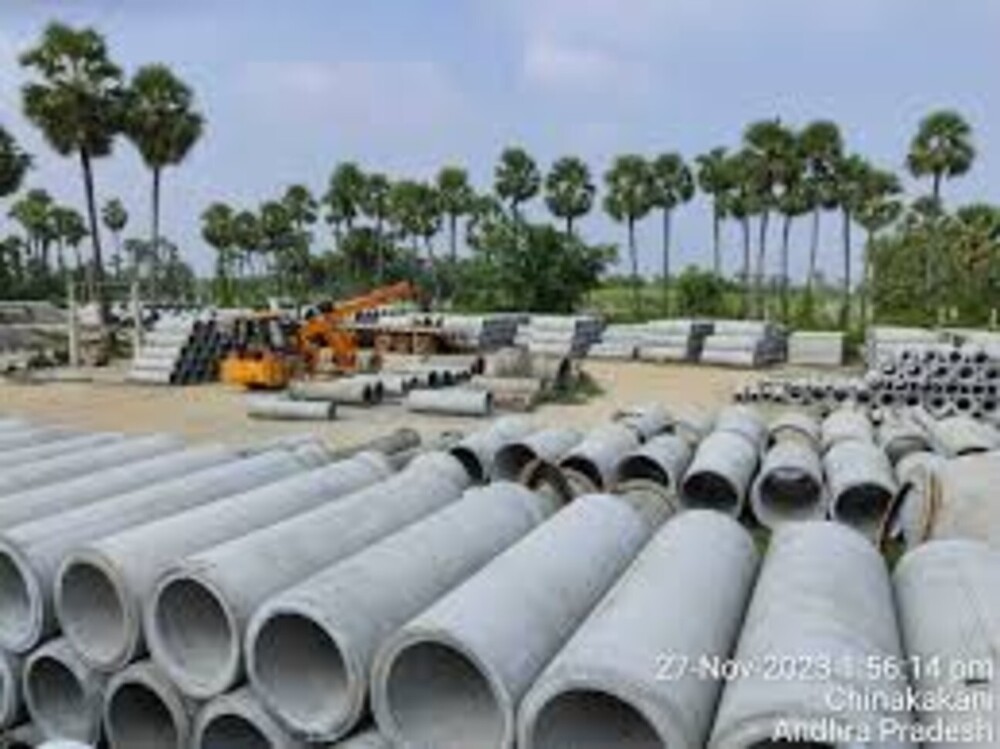
Reinforced Cement Concrete RCC spun pipes are high strength concrete pipes reinforced with steel and manufactured using a centrifugal spinning process. They are widely used for underground drainage sewerage irrigation and culvert systems due to their durability and load bearing capacity.
Key Features
High strength Steel reinforcement provides excellent resistance to internal pressure and external loads
Dense structure The spinning process removes excess water making the concrete compact and less porous
Durability Resistant to corrosion weathering and moderate chemical attack
Leak proof joints Designed with spigot and socket or collar joints for tight connections
Long service life Typically lasts several decades with minimal maintenance
Manufacturing Process
Mould preparation Steel moulds are cleaned and assembled
Reinforcement placement Steel cages are placed inside the mould
Concrete filling Concrete mix is poured into the mould
Spinning The mould rotates at high speed distributing concrete evenly and compacting it
Curing Pipes are cured by water or steam curing to gain strength
Demoulding and finishing Pipes are removed and inspected
Types of RCC Spun Pipes
Non pressure pipes NP classes NP2 NP3 NP4 used for drainage and sewer systems
Pressure pipes P classes designed to carry water under pressure such as irrigation pipelines
Sizes
Diameter typically ranges from 150 mm to 2000 mm or more
Length usually 2 to 2.5 meters per pipe depending on manufacturer
Applications
Sewerage and drainage systems
Stormwater disposal
Irrigation canals and water supply
Road culverts and cross drainage works
Industrial effluent disposal
Advantages
Strong and rigid structure
Economical for large scale projects
Fire resistant and environmentally friendly
Can withstand heavy soil and traffic loads
Limitations
Heavy weight requires machinery for handling
May crack if not handled properly
Jointing requires proper sealing to prevent leakage
Engineered for Durability and StrengthBuilt using high-quality reinforced cement concrete and mild steel bars, NP RCC Hume Pipes are designed to withstand challenging underground conditions. Their high abrasion resistance and robust construction ensure a longer operational lifespan, making them an efficient choice for drainage, irrigation, and sewage systems.
Standardized Construction and VersatilityConforming to IS:458, these Hume pipes feature precise dimensions, round section shape, and a smooth internal finish for reliable water flow. Suitable for diverse underground applications including culverts and water drainage, they accommodate different project requirements across infrastructure and civil engineering segments.
Secure and Reliable Jointing MethodEach pipe utilizes a collar joint method with cement mortar packing, providing a dependable and watertight seal. This technique minimizes leakage and ensures the structural integrity of the pipeline, even when exposed to fluctuating pressures during testing.
FAQ's of NP RCC Hume Pipe:
Q: How are NP RCC Hume Pipes installed underground?
A: NP RCC Hume Pipes are installed by trenching the designated area, carefully laying the pipes underground, and joining each section using collar joints sealed with cement mortar. This method ensures a secure and aligned assembly, suitable for use in sewerage, drainage, and irrigation systems.
Q: What materials reinforce these RCC Hume pipes and why?
A: These pipes are reinforced with mild steel bars within the concrete to enhance structural integrity and load-bearing capacity. The combination of reinforced cement concrete and steel bars provides high resistance to both pressure and environmental stress, increasing longevity and reliability.
Q: When should I use NP RCC Hume Pipes instead of other types?
A: NP RCC Hume Pipes are ideal for non-pressure applications such as sewage lines, stormwater drainage, irrigation channels, culverts, and road-crossing pipes, especially where long life and high abrasion resistance are required. They are not suitable for high-pressure water conveyance.
Q: Where can these pipes be applied most effectively?
A: These pipes are most effective in underground infrastructural applications, including urban and rural drainage systems, culverts under roads, sewer networks, irrigation conduits, and water drainage projects where durability and resistance to corrosion are priorities.
Q: What is the process for jointing these pipes during installation?
A: The pipes are connected using a butt joint with a collar, which is then packed and sealed with cement mortar. This method ensures a tight, leak-resistant connection suitable for underground water conveyance and drainage systems.
Q: What are the main benefits of using NP RCC Hume Pipes?
A: NP RCC Hume Pipes offer extensive benefits including high mechanical strength, resistance to abrasion and corrosion, excellent sealing against leakage, standard compliance (IS:458), and suitability for light to medium load, non-pressure underground applications.
Q: How does the pipe withstand environmental and operational stresses?
A: The pipe's reinforced concrete structure, smooth surface finish, high abrasion resistance, and corrosion-resilient composition equip it to resist environmental factors such as moisture, ground movement, and chemical exposure, ensuring sustained durability and performance.



 Send Inquiry


 Send Inquiry
 Send Inquiry
 Send SMS