About NP4 RCC Hume Pipe
Reinforced Cement Concrete RCC Spun Pipes Description
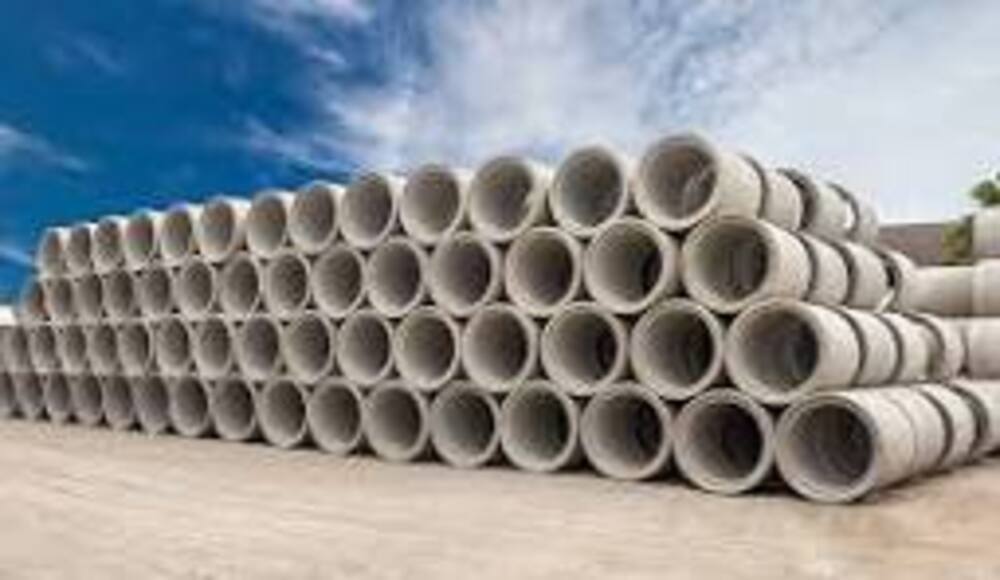
Reinforced Cement Concrete RCC spun pipes are high strength concrete pipes reinforced with steel and manufactured using a centrifugal spinning process. They are widely used for underground drainage sewerage irrigation and culvert systems due to their durability and load bearing capacity.
Key Features
High strength Steel reinforcement provides excellent resistance to internal pressure and external loads
Dense structure The spinning process removes excess water making the concrete compact and less porous
Durability Resistant to corrosion weathering and moderate chemical attack
Leak proof joints Designed with spigot and socket or collar joints for tight connections
Long service life Typically lasts several decades with minimal maintenance
Manufacturing Process
Mould preparation Steel moulds are cleaned and assembled
Reinforcement placement Steel cages are placed inside the mould
Concrete filling Concrete mix is poured into the mould
Spinning The mould rotates at high speed distributing concrete evenly and compacting it
Curing Pipes are cured by water or steam curing to gain strength
Demoulding and finishing Pipes are removed and inspected
Types of RCC Spun Pipes
Non pressure pipes NP classes NP2 NP3 NP4 used for drainage and sewer systems
Pressure pipes P classes designed to carry water under pressure such as irrigation pipelines
Sizes
Diameter typically ranges from 150 mm to 2000 mm or more
Length usually 2 to 2.5 meters per pipe depending on manufacturer
Applications
Sewerage and drainage systems
Stormwater disposal
Irrigation canals and water supply
Road culverts and cross drainage works
Industrial effluent disposal
Advantages
Strong and rigid structure
Economical for large scale projects
Fire resistant and environmentally friendly
Can withstand heavy soil and traffic loads
Limitations
Heavy weight requires machinery for handling
May crack if not handled properly
Jointing requires proper sealing to prevent leakage
Let me know if you want a short one line description or a tender specification format
Engineered for Heavy-Duty PerformanceNP4 RCC Hume Pipes are manufactured to withstand demanding conditions in civil engineering projects. Their M-40 grade material delivers exceptional strength and impact resistance, empowering them to support substantial loads. This makes them the preferred choice for critical applications like underground sewerage, drainage systems, and road or rail culverts.
Reliable Jointing and Leak-Proof OperationThe spigot and socket system with a high-quality rubber ring ensures secure and watertight connections. Each pipe undergoes a hydrostatic leakage test per IS standards, providing dependable leak resistance even under high-pressure operating conditions. The smooth internal surface promotes efficient water flow and minimizes maintenance needs.
Optimized for Longevity and Low UpkeepWith a non-combustible and corrosion-resistant concrete composition, NP4 RCC Hume Pipes are purpose-built for sustainability. Their structure resists fire, chemical attack, and environmental wear, resulting in minimal servicing over decades of service life. Suitable for varied climates and project needs, they deliver reliable underground infrastructure solutions.
FAQ's of NP4 RCC Hume Pipe:
Q: How are NP4 RCC Hume Pipes installed underground?
A: NP4 RCC Hume Pipes can be installed either manually or by using a crane, depending on the diameter of the pipe. Typically, smaller diameters are managed by manual labor, while larger pipes require crane assistance. Installation depth and minimum cover are determined as per IS 458 guidelines and the project's engineering specifications.
Q: What jointing system is used for NP4 Hume Pipes, and how does it function?
A: The pipes utilize a spigot and socket jointing system with a rubber ring to form a reliable seal. This method ensures quick assembly and prevents leakage by providing a flexible, water-tight joint, especially beneficial in underground applications subject to ground shifts.
Q: When should NP4 RCC Hume Pipes be specified for a project?
A: NP4 RCC Hume Pipes are best chosen when the load requirements are heavy or when the pipeline will be exposed to road traffic, railways, or deep-fill situations. They are suitable for sewerage, drainage, and culverts where high strength and durability are essential.
Q: Where can NP4 Hume Pipes be effectively used?
A: These pipes are designed for underground usage in sewerage, drainage systems, water supply projects, and as culverts beneath roads and railways. Their high load-bearing capability and resistance to environmental degradation make them ideal across urban, industrial, and rural infrastructure.
Q: What benefits do NP4 RCC Hume Pipes provide over other piping materials?
A: NP4 RCC Hume Pipes offer superior load resistance, fire and corrosion protection, long service life, and low maintenance compared to many alternative materials. Their smooth interior supports efficient fluid flow and reduces blockages, contributing to reliable infrastructure.
Q: How is leakage testing performed on NP4 RCC Hume Pipes?
A: Leakage testing is conducted using a hydrostatic test as per IS Standards. This process involves subjecting the jointed pipe to water pressure to ensure joints are completely watertight and meet performance specifications.
Q: What is the typical maintenance required for NP4 RCC Hume Pipes?
A: Owing to their material strength, smooth surface, and corrosion resistance, NP4 RCC Hume Pipes have minimal maintenance needs. Periodic inspections may be conducted, but repairs or cleaning are rarely necessary over decades of operation.




 Send Inquiry


 Send Inquiry
 Send Inquiry
 Send SMS